

(Urotoday.com) The 2025 Western Section AUA annual meeting featured a urothelial carcinoma session and a presentation by Chinedu Mmeje, MD, discussing the impact of tumor burden or focality on duration of response to treatment with UGN-102 in recurrent low-grade intermediate-risk non-muscle invasive bladder cancer. In the ENVISION pivotal phase 3 study, patients with low-grade intermediate-risk non-muscle invasive bladder cancer were treated with UGN-102, a reverse thermal hydrogel containing mitomycin, which is being developed as a nonsurgical treatment option1. Complete response rate at 3 months was 79.6% (95% CI: 73.9-84.5), with an 80.6% probability of remaining in response 18 months later by Kaplan–Meier estimate. This analysis evaluates the impact of tumor focality and burden on outcomes at a minimum of 18 months follow-up.
There were 240 patients enrolled and received at least one dose of UGN-102, of which 95% (n = 228) received all 6 doses. Three months after the first dose, patients were examined for the presence of bladder cancer using cystoscopy, urine cytology, and for-cause biopsy. Patients achieving complete response (no detectable disease) entered the follow-up period and were surveilled regularly for recurrence:
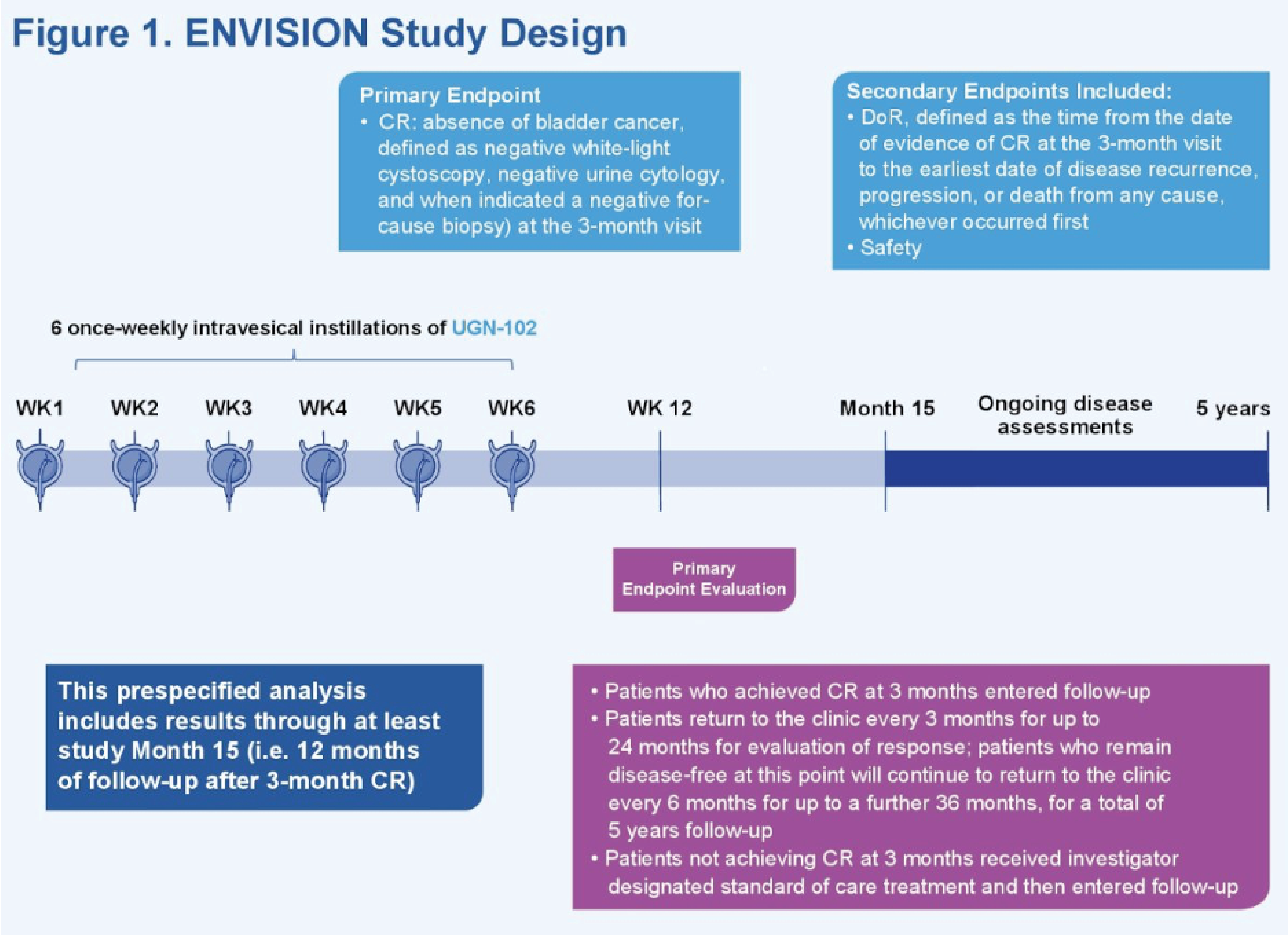
In pre-specified subgroups, comparisons of patients with tumor burden (calculated as the sum of the diameters of all visible tumors) ≤3cm vs >3 cm and solitary versus multifocal tumors were performed for complete response rate at 3 months and hazard ratios of duration of response at 18 months after achieving complete response.
Complete response rate at 3 months was 82.7% versus 73.8% for patients with tumor burden ≤3 cm and >3 cm, respectively. In patients with multifocal versus solitary tumors, 3-month complete response was 79.4% versus 82.5%. Of patients with complete response at 3 months and a minimum follow-up of 18 months, 20.4% (39/191) of patients experienced a duration of response event, mostly due to recurrence of low-grade disease, 17.3% (33/191). Duration of response event rates by tumor burden and tumor count are shown in the following table:
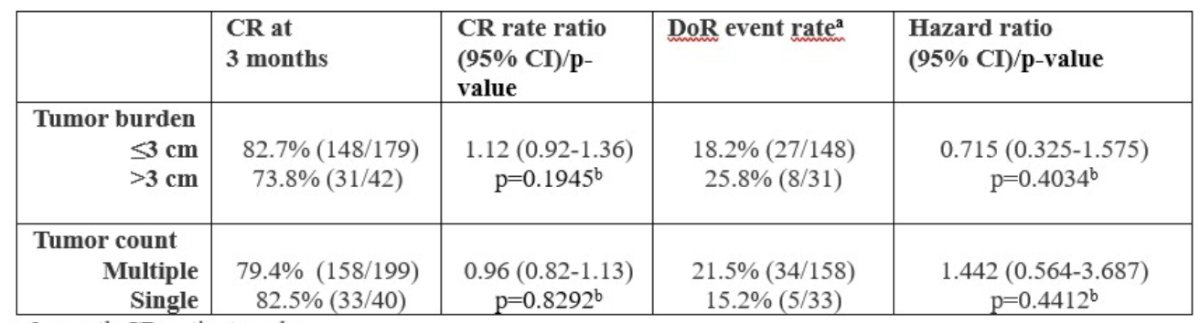
Comparisons of complete response rate and duration of response by tumor burden and tumor count did not show any statistically significant differences.
Dr. Mmeje concluded his presentation discussing the impact of tumor burden or focality on duration of response to treatment with UGN-102 in recurrent low-grade intermediate-risk non-muscle invasive bladder cancer with the following take-home points:
- The complete response rate was robust and durable through 18 months, and no significant differences were observed based on tumor burden or focality
- These results should be interpreted with caution, given the small sample sizes of the comparator groups
- UGN-102 is potentially an efficacious nonsurgical treatment option for many patients with low-grade intermediate risk non-muscle invasive bladder cancer, irrespective of tumor burden or focality
Presented by: Chinedu Mmeje, MD, Banner Health, Phoenix, AZ
Written by: Zachary Klaassen, MD, MSc – Urologic Oncologist, Associate Professor of Urology, Georgia Cancer Center, Wellstar MCG Health, @zklaassen_md on Twitter during the 2025 Western Section American Urological Association (AUA) Annual Meeting, Napa Valley, CA, Sun, Nov 2 – Thurs, Nov 6, 2025.
References: