

(UroToday.com) The 2025 SNMMI annual meeting featured a prostate cancer and dosimetry session and a presentation by Dr. Sabina Dizdarevic discussing eight-year follow-up of patient outcomes and bone health in radium-223-treated patients from the global REASSURE study. Bone metastases are common in patients with advanced prostate cancer. These metastases are often painful and lead to skeletal complications, negatively impacting quality of life and survival. Radium-223 is an alpha-emitting calcium mimetic that targets bone metastases, and was the first radionuclide therapy approved for the treatment of metastatic castration-resistant prostate cancer (mCRPC) based on the ALSYMPCA trial.1 The REASSURE study is a global, prospective, observational study assessing the long-term safety of radium-223 in patients with mCRPC within routine clinical practice. At the 2025 SNMMI annual meeting, Dr. Dizdarevic and colleagues reported data on pain response, skeletal events, and survival from the final analyses of the study, which includes extended follow-up of up to 8 years from the initiation of radium-223.
This analysis (final data cut-off: October 24, 2024) evaluated outcomes from the Brief Pain Inventory–Short Form [BPI-SF], including pain severity, worst pain, and pain interference, as well as overall survival in all patients, regardless of whether they had pain at baseline. Additionally, pain response, defined as a ≥2 point improvement in BPI-SF worst pain score, was assessed specifically in patients who reported pain at baseline. The incidence of fractures and non-fracture bone events was also analyzed in patients with and without bone health agents throughout the observation period. The study design for REASSURE is as follows:
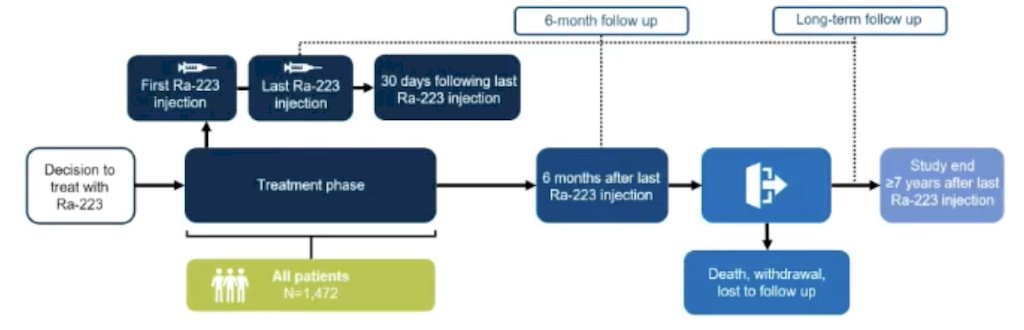
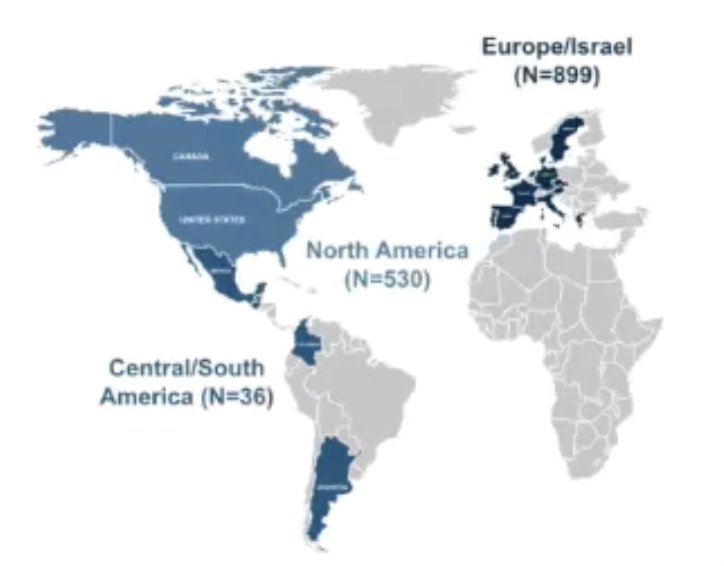
Overall, 1,472 patients treated from 2014 to 2017 across 191 centers in 20 countries were included in this final analysis (median follow-up 17 months; range 0.3–95.4):
The median age was 73 years (range 44–94), and most patients had an ECOG performance status of 0 or 1 (80%). In total, 15% of patients had <6 metastatic sites, 49% had 6–20 sites, 24% had >20 sites but not a superscan, and 6% had a superscan. Previous treatments included abiraterone (48% of patients), enzalutamide (39%), docetaxel (39%), and cabazitaxel (9%). Overall, 51% of patients had received prior radiotherapy (of whom 81% had received prior external beam radiotherapy) and 48% had received prior opioids. Patients received a median of 6 doses of radium-223 and 67% received ≥5 doses. Concomitant life-prolonging therapies included abiraterone (15%), enzalutamide (18%), docetaxel (2%), and cabazitaxel (1%). Additional concomitant therapies included opioids (56%), bone health agents (41%), and external beam radiotherapy (7%):

Across the entire population, pain severity, worst pain, and pain interference scores decreased with each radium-223 cycle up to dose 5 and remained below baseline at the last follow-up visit:

Among patients with pain at baseline, the proportion reporting a clinically meaningful pain response gradually increased throughout treatment, reaching 36% at dose 2, 41% at dose 3, 45% at dose 4, 46% at 5, and 46% at dose 6:

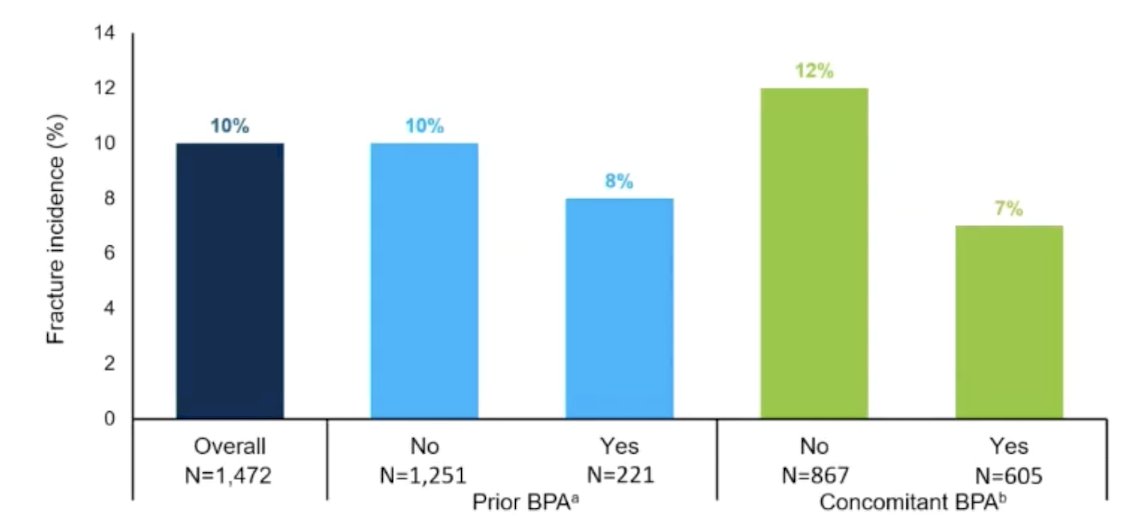
Fractures occurred in 10% of patients overall and were less common in those with prior or concomitant bone health agent use:
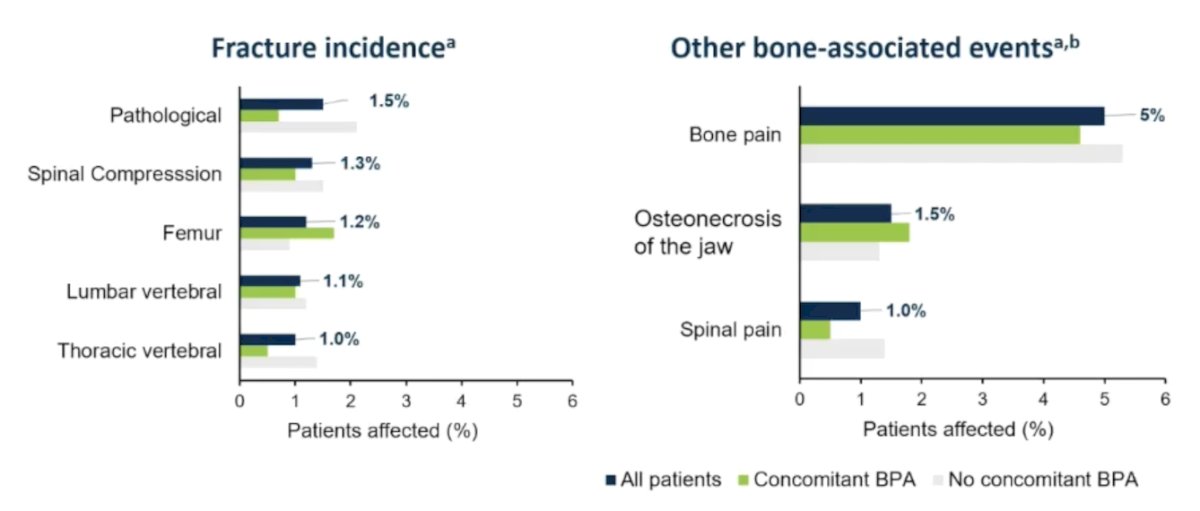
Fractures with an incidence of ≥1% included femur, lumbar vertebral, thoracic vertebral, spinal compression, and pathological. The incidence of pathological fractures was lower in patients with (0.7%) than without (2.1%) concomitant bone health agent use. Non-fracture bone events with an incidence of ≥1% included bone pain (5.0%), spinal pain (1.0%), and osteonecrosis of the jaw (1.5%):
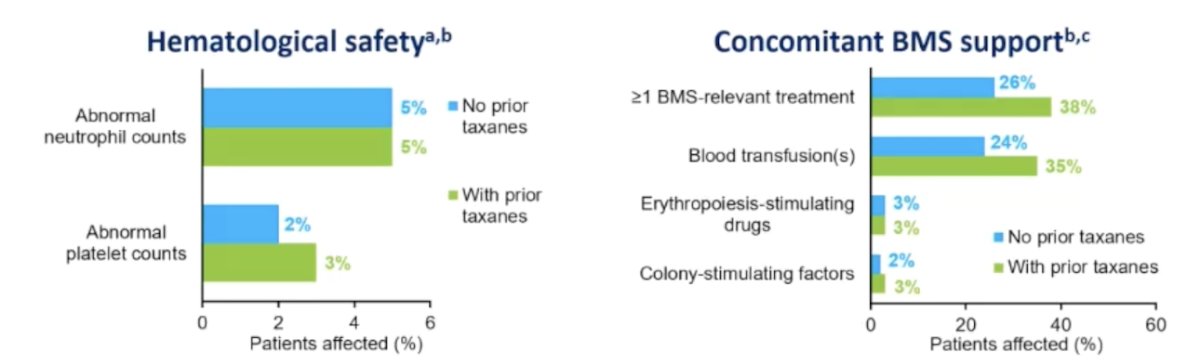
Prior taxanes did not increase reported hematological adverse events during treatment with radium-223. The use of blood transfusions was more common in patients who had received prior taxanes (38%) than those who did not (26%):
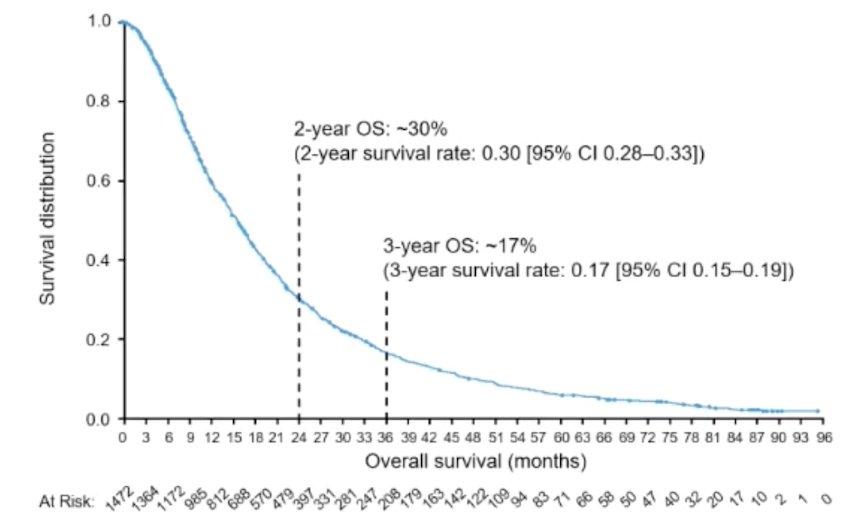
There were 25 secondary malignancies in 24 patients (1.6%), which was within the expected range for this population. Finally, the median overall survival was 15.6 months (95% CI, 14.6, 16.4):
Dr. Dizdarevic concluded her presentation discussing eight-year follow-up of patient outcomes and bone health in radium-223-treated patients from the global REASSURE study, the following take home points:
- Patients received a median of 6 doses of radium-223, with 67% receiving 5+ doses
- Approximately half of patients with pain at baseline achieved a clinically meaningful pain response
- Incremental decreases in pain were seen over the course of radium-223 therapy
- The greatest response rates were seen in patients who received 5 of 6 doses
- The risk of fractures was low with radium-223 and concomitant bone protective agents reduced this further. However, fewer than half of patients received concomitant bone protective agents
- The median overall survival observed was consistent with other real world studies
Presented by: Sabina Dizdarevic, University Hospitals Sussex NHS Foundation Trust, Brighton & Sussex Medical School, University of Sussex and Brighton, Brighton
Written by: Zachary Klaassen, MD, MSc – Urologic Oncologist, Associate Professor of Urology, Georgia Cancer Center, Wellstar MCG Health, @zklaassen_md on Twitter during the 2025 Society of Nuclear Medicine and Molecular Imaging (SNMMI) Annual Meeting, New Orleans, LA, June 21st – 24th, 2025
References:
- Parker C, Nilsson S, Heinrich D, et al. Alpha emitter radium-223 and survival in metastatic prostate cancer. N Engl J Med 2013;369(3):213-223.