

(UroToday.com) The 2025 ASTRO annual meeting featured a prostate cancer session and a presentation by Mitchell Finkelstein discussing real world utilization of salvage radiotherapy in biochemically recurrent prostate cancer. Recent advancements in the management of biochemical recurrence following local treatment for prostate cancer have broadened the spectrum of therapeutic options. At the 2025 ASTRO annual meeting, Finkelstein and colleagues examined the real-world utilization of salvage radiotherapy in contemporary biochemical recurrence prostate cancer patients.
This study was a retrospective review of prospectively collected data among 30,779 active prostate cancer patients within the Precision Point Specialty (PPS) Analytics Portal for Prostate Cancer. This database contains electronic medical records for over 80 active community urology practices. For this initial analysis of over 30,000 patients, biochemical recurrence data was collected over the past 36 months from a large multi-center, multi-specialty group facilitating advanced genitourinary care across the northeast, midwest, and south regions of the United States. Salvage radiotherapy eligibility after surgical definitive therapy was classically defined as radiation administered > 1 year post-radical prostatectomy and/or after a post-nadir PSA >= 0.1 ng/ml. Failure after primary radiation, High-Intensity Focused Ultrasound (HIFU), or cryotherapy therapy was defined as PSA 2 ng/ml above nadir. None of the biochemical recurrence patients included had evidence of metastatic disease. Data on clinicopathologic features, primary therapy, PSA kinetics, and salvage therapy were collected.
There were 2,003 patients (7%) who had biochemical recurrence, of which 1,441 (72%) were post-radical prostatectomy:

Only 1,002 (66%) of radiation-eligible patients received salvage radiotherapy post-radical prostatectomy, cryotherapy, or HIFU. Furthermore, in contemporary biochemical recurrence patients with aggressive disease noted to have Gleason 8 or higher, the radiotherapy utilization rate was only 27.9%. The median time to salvage radiotherapy following radical prostatectomy was 24 months, the median patient age was 77 years, and the median PSA at the time of salvage radiotherapy was 0.4 ng/mL. The following figure highlights the breakdown of biochemical recurrence patients treated with and without salvage radiotherapy by Gleason score: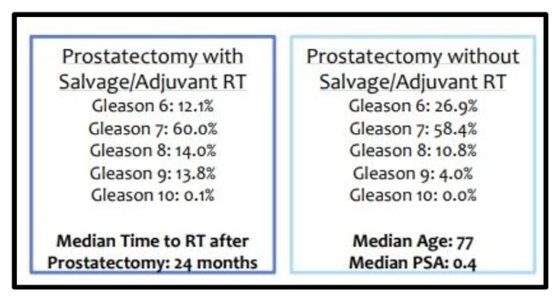
The median time to salvage radiotherapy following cryotherapy/HIFU was 48 months, the median patient age was 78 years, and the median PSA at the time of salvage radiotherapy was 4.5 ng/mL. The following figure highlights the breakdown of biochemical recurrence patients treated with and without salvage radiotherapy by Gleason score: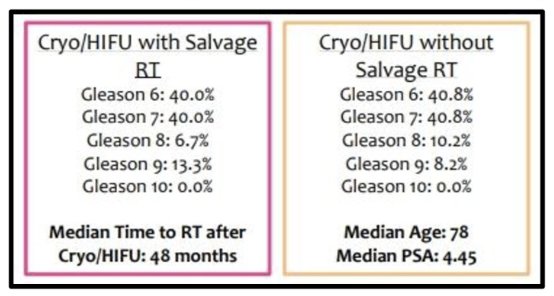
Gleason grade and pathologic stage were the variables that had the greatest influence on the decision to use salvage radiotherapy. A retrospective review of prospectively collected next-generation imaging data and genomic biomarkers is underway.
Mitchell Finkelstein concluded his presentation discussing real-world utilization of salvage radiotherapy in biochemically recurrent prostate cancer with the following take-home points:
- The data suggests real-world underutilization of salvage radiotherapy in eligible biochemical recurrence patients with prostate cancer in the community setting
- These findings indicate a need for enhanced collaboration between specialties to optimize the care of real-world community prostate cancer patients
Presented by: Mitchell Finkelstein, Barrett, the Honors College, Arizona State University, Tempe, AZ
Written by: Zachary Klaassen, MD, MSc – Urologic Oncologist, Associate Professor of Urology, Georgia Cancer Center, Wellstar MCG Health, @zklaassen_md on Twitter during the 2025 American Society for Radiation Oncology (ASTRO) Annual Meeting, San Francisco, CA, Sat, Sept 27 – Wed, Oct 1, 2025.